
Country Guide · Cuba
Cuba Travel Guide 2026
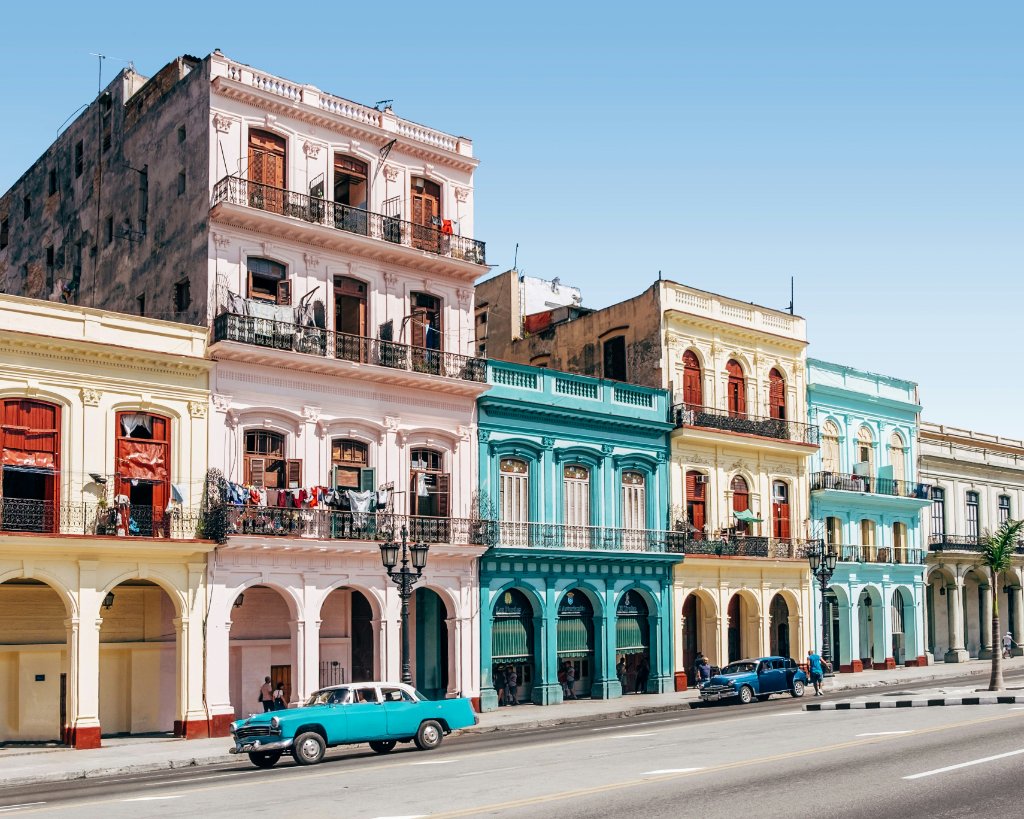
Cuba is one of the most singular travel experiences available anywhere. The combination of extraordinary colonial architecture, 1950s American cars that have been kept running through ingenuity and necessity, rum that costs less than water, cigars rolled by hand in the fields where the tobacco was grown, and a music culture so deeply embedded in daily life that it genuinely just starts up on street corners creates a place that bears no resemblance to anywhere else. Havana alone is worth a week. Add Trinidad, the Vinales Valley, and a few days on a northern cay and you begin to understand why people come back. Cuba rewards curiosity and patience. The infrastructure is genuinely limited, the internet is sparse, and things do not always go to plan. That is also, to a large extent, the point.
On this page
Cuba at a Glance
- Best For
- Colonial architecture, vintage cars, live music and salsa, rum and cigars, Caribbean beaches, revolutionary history, tobacco valleys, and one of the most atmospheric cities in the Americas
- Must-See
- Old Havana, the Malecon at sunset, Trinidad, Vinales Valley, Cienfuegos, Playa Ancon, Cayo Coco, Santiago de Cuba's Carnival, and a working tobacco farm
- Food and Drink
- Ropa vieja, lechon asado, moros y cristianos, tostones, fresh tropical fruit, Havana Club rum in a classic mojito or daiquiri, and a hand-rolled cigar in the valley where the leaf was grown
Best Time to Visit Cuba
November to April · Dry Season (Best Overall)
This is when Cuba is at its most comfortable. Temperatures hover between 22 and 28 degrees Celsius, humidity is manageable, and rainfall is minimal. December and January see the highest visitor numbers, particularly around Christmas and New Year when prices peak and Havana fills with international visitors. Book accommodation well in advance for this period. February and March offer the best balance of good weather and reasonable availability.
May and June · Shoulder Season
The rains begin in May but Cuba remains very enjoyable. Prices drop noticeably and the island is significantly less crowded. The heat and humidity increase, but the tropical downpours tend to be short and dramatic rather than all-day affairs. This can be an excellent time to visit if you are prepared to embrace the heat and carry an umbrella.
July and August · High Humidity and Hurricane Risk
The hottest and most humid months, with hurricane risk beginning from August. Santiago de Cuba's famous Carnival takes place in late July and is one of the great street festivals in the Caribbean, making this month worth considering despite the conditions. Accommodation is cheaper and the tourist sites are noticeably quieter.
September and October · Hurricane Season Peak
Hurricane risk is at its highest between September and October. Travel insurance with hurricane cancellation cover is strongly recommended for anyone visiting in this window. The island can be beautiful between storms, prices are at their lowest of the year, and determined travellers can have major sites largely to themselves.
Cuba Travel Costs
Budget · $50 to $80 USD per day
Staying in casas particulares, the Cuban equivalent of bed and breakfasts run by local families, costs around $25 to $40 USD per night and is far preferable to state-run hotels in terms of atmosphere and local connection. Street food and local peso restaurants, known as paladares, keep food costs low. Local transport by shared taxi or viazul bus is inexpensive.
Mid-Range · $100 to $180 USD per day
A well-located casa particular or a smaller state hotel, meals at paladares with more extensive menus, private taxis between cities, and guided excursions to tobacco farms, rum distilleries, and day trips to the Valle de los Ingenios. Private taxis between cities are faster and more comfortable than the Viazul bus and cost around $25 to $50 USD per journey.
All-Inclusive Resort · Variable
All-inclusive resorts at Varadero, Cayo Coco, and Cayo Guillermo operate in a parallel economy and charge rates comparable to Caribbean resort destinations elsewhere. They are comfortable and well-run but entirely separate from the Cuba that exists outside the resort gates. Combine a few resort days with time in Havana and Trinidad for a more complete experience.
Cuba operates on a cash economy for most travellers. Bring sufficient cash in euros, pounds sterling, or Canadian dollars. US dollars attract an additional conversion fee. ATMs exist but are unreliable and frequently empty. Do not arrive with only a card.
Getting to Cuba
Flying In
Jose Marti International Airport in Havana (HAV) is the main gateway, with direct flights from London, Madrid, Paris, Toronto, and Mexico City. Varadero (VRA) and Cayo Coco (CCC) airports receive charter flights during peak season. Direct flights from London take around 9 to 10 hours. Cubana de Aviacion, Iberia, Air France, and Virgin Atlantic all operate routes.
Entry Requirements
UK and most EU citizens require a tourist card, which can be purchased from the airline before departure or at the airport. Travel insurance is a legal requirement to enter Cuba and must be shown at the border. US citizens are subject to additional restrictions under US law and must travel under one of the twelve approved categories of authorised travel. Always check current requirements before booking.
Getting Around Cuba
Viazul Bus
Viazul is the tourist bus service connecting major destinations including Havana, Trinidad, Vinales, Varadero, and Santiago de Cuba. It is inexpensive, air-conditioned, and reasonably reliable. Book tickets in advance as services fill up quickly during peak season. The Havana to Trinidad journey takes around six hours and costs approximately $25 USD.
Private Taxis (Particulares)
Private taxis in classic American cars or more modern vehicles can be hired for point-to-point journeys between cities. They are faster and more flexible than the bus, negotiate shared journeys if you want to reduce the cost, and provide the most iconic Cuban travel experience. Agree a price before departure and confirm whether it is per person or for the vehicle.
Rental Cars
Car hire is available from state operators but demand consistently exceeds supply, particularly in peak season. Fuel shortages have been an issue in recent years. If you do hire a car, book well in advance through an established operator, carry spare fuel when driving outside cities, and familiarise yourself with Cuban road conditions, which vary considerably.
Top Destinations in Cuba
Havana
Havana is one of the great cities of the Americas, and there is simply nowhere else on earth quite like it. The combination of extraordinary colonial architecture in various states of magnificent decay, 1950s American cars in improbable colours cruising broad boulevards, the sound of son and salsa drifting from doorways, and the particular energy of a city that has been frozen in a specific moment and then continued to evolve within that constraint makes it completely unlike anywhere you have been before. Old Havana, a UNESCO World Heritage site, is compact enough to walk in a morning but rich enough to spend several days exploring. The Malecon seafront at sunset, with locals gathered on the sea wall as waves crash over it, is one of the most atmospheric urban scenes in the world.
Trinidad
Trinidad is Cuba's best-preserved colonial town, and it earns that description without any qualification. The cobblestone streets, pastel-coloured mansions, and Plaza Mayor at its heart look almost exactly as they did in the 18th century when sugar wealth made this one of the richest towns in the Caribbean. The town is small enough to walk entirely, the surrounding Valle de los Ingenios holds the ruins of dozens of sugar plantations, and the nearby beach at Playa Ancon is excellent. In the evenings the music spills out of the staircase bar at the Casa de la Musica and the entire town seems to be dancing.
Vinales Valley
The Vinales Valley in Pinar del Rio province is one of Cuba's most dramatic landscapes, a UNESCO World Heritage site where dramatic limestone outcrops called mogotes rise from a flat valley floor covered in tobacco fields. This is where the finest Cuban tobacco is grown, and walking between the fields and stopping at a farm to watch the drying and rolling process gives you genuine insight into what makes a Cohiba different from everything else. The valley is best explored by bicycle or horse, and the sunsets from the viewpoints above the town are extraordinary.
Cienfuegos
Cienfuegos is the most French of Cuba's cities, founded by French settlers in the 19th century and retaining an elegance and orderliness that distinguishes it from the more chaotic character of Havana. The neoclassical architecture around Parque Jose Marti is beautifully maintained, the Teatro Tomas Terry is one of the finest theatres in the Caribbean, and the bay setting gives the city a particular quality of light in the early morning and late afternoon. A day trip from Trinidad or a stop on the way between Havana and the colonial south is the natural way to include it.
Santiago de Cuba
Santiago is Cuba's second city and in many ways its most authentically Caribbean one. The music here is rawer and more intense than in Havana, the food has stronger Afro-Caribbean influences, and the revolutionary history is more viscerally present. The Cuartel Moncada, where Fidel Castro launched the 1953 uprising that began the revolution, is now a school and museum. The Castillo del Morro fortress above the bay is spectacular. The city's July Carnival is one of the great street parties in the Caribbean.
Varadero and the Northern Cays
Varadero has one of the longest white sand beaches in the world and provides the archetypal Cuban resort experience. The all-inclusive hotels here are well-run and the beach itself is genuinely beautiful. For something more remote and quieter, the cays off the northern coast, particularly Cayo Coco and Cayo Guillermo, offer some of the most pristine Caribbean beaches in Cuba with calm turquoise water and excellent snorkelling on the surrounding reef.

Top Things to Do in Cuba
Culture and History
- Walk Old Havana in the early morning before the tour groups arrive
- Sit on the Malecon sea wall at sunset with a bottle of rum and watch the city slow down
- Visit the Museum of the Revolution in Havana and see the Granma, the yacht that brought Castro and his rebels from Mexico
- Watch a salsa class or simply find a bar where live music starts at ten and continues until four
- Walk the cobblestone streets of Trinidad and climb the bell tower of the Manaca Iznaga plantation for views across the valley
- The Hemingway Museum at Finca Vigia, where the writer lived for twenty years and wrote The Old Man and the Sea
Nature, Beaches and Food
- Visit a tobacco farm in the Vinales Valley and watch the entire process from leaf to finished cigar
- Swim at Playa Ancon near Trinidad, one of the finest beaches on the main island
- Snorkel the reef around Cayo Levisa or Cayo Santa Maria
- Drink a properly made mojito at La Bodeguita del Medio in Havana, where Hemingway once drank his
- Eat at a paladar, a privately run restaurant in someone's home, for the best food in Cuba
- Hike in the Sierra del Escambray mountains near Trinidad, through cloud forest and coffee plantations
Sample 10-Day Cuba Itinerary
Days 1 to 3
Havana
Arrive and spend three days in one of the world's great cities. Walk Old Havana on the first morning, visit the Capitolio and the Museum of the Revolution on day two, and spend the third exploring the residential neighbourhood of Vedado and the Malecon at sunset. Find live music every evening without trying particularly hard.
Day 4
Vinales Valley
Take an early bus or private taxi three hours west to Vinales. Hire a horse or bicycle in the afternoon to ride between the tobacco farms and mogote outcrops. Watch the sunset from the Hotel Los Jazmines viewpoint above the valley. Stay overnight in a casa particular in the town.
Days 5 and 6
Back to Havana, then Trinidad
Return to Havana and take the afternoon Viazul bus to Trinidad, arriving in the evening. Walk the Plaza Mayor at night when it is lit up and the music starts. Spend the next full day exploring the colonial streets, the Palacio Cantero museum, and taking the tourist train to the Valle de los Ingenios in the afternoon.
Days 7 and 8
Trinidad and Playa Ancon
Spend the morning hiking in the Sierra del Escambray with a local guide. Return to Trinidad for lunch, then take a shared taxi 12 kilometres south to Playa Ancon for the afternoon. The beach is long, the water is warm, and the snorkelling on the nearby reef is excellent.
Days 9 and 10
Cienfuegos and back to Havana
Take a morning bus to Cienfuegos, spend the afternoon walking the neoclassical streets around Parque Jose Marti and visiting the Teatro Tomas Terry, then continue to Havana in the evening. Use the final day in Havana for last purchases, a proper farewell mojito, and an airport transfer from Jose Marti International.
Practical Tips for Cuba
What to Pack
- Enough cash for your entire trip, plus a reserve emergency fund
- All medications you need, as pharmacies in Cuba have very limited stock
- Insect repellent, particularly for evening use in the Vinales Valley and beach areas
- Sunscreen for beach days and ruins visits
- Light clothing with something smart for evenings at better paladares
- Offline maps downloaded before arrival, as mobile data is unreliable
- A power bank, as electricity outages do occur
Quick FAQs
- Currency: Cuban Peso (CUP). Bring cash in euros, pounds, or Canadian dollars. Do not rely on ATMs or cards.
- Internet: Limited and slow. Download everything you need offline before arriving. Wi-Fi cards can be purchased from ETECSA offices.
- Travel insurance: Legally required to enter Cuba. Show proof at the border or you may be denied entry.
- US visitors: Subject to additional restrictions under US law. Travel is permitted under twelve approved categories but requires careful compliance.
- Casas particulares: Always stay in them where possible. They are cheaper, better, and the income goes directly to Cuban families.
Plan with the Genie
Ready to plan your Cuba trip?
Get a personalised AI-powered itinerary with hidden gems, daily costs, and booking links in under a minute.